

Probe UNC-15 / No. 6 Explorer, Double Ended, Silicone Handle
Couldn't load pickup availability
| SKU | 111224DS-PK |
| Brand | INSTRUDENTAL |
| Type | Diagnostic |
| Category | Diagnostic |
| Tags | 1112-24-DSSilicone Handle |
| Stock | ✓ In Stock |
DETAILS AND CARE
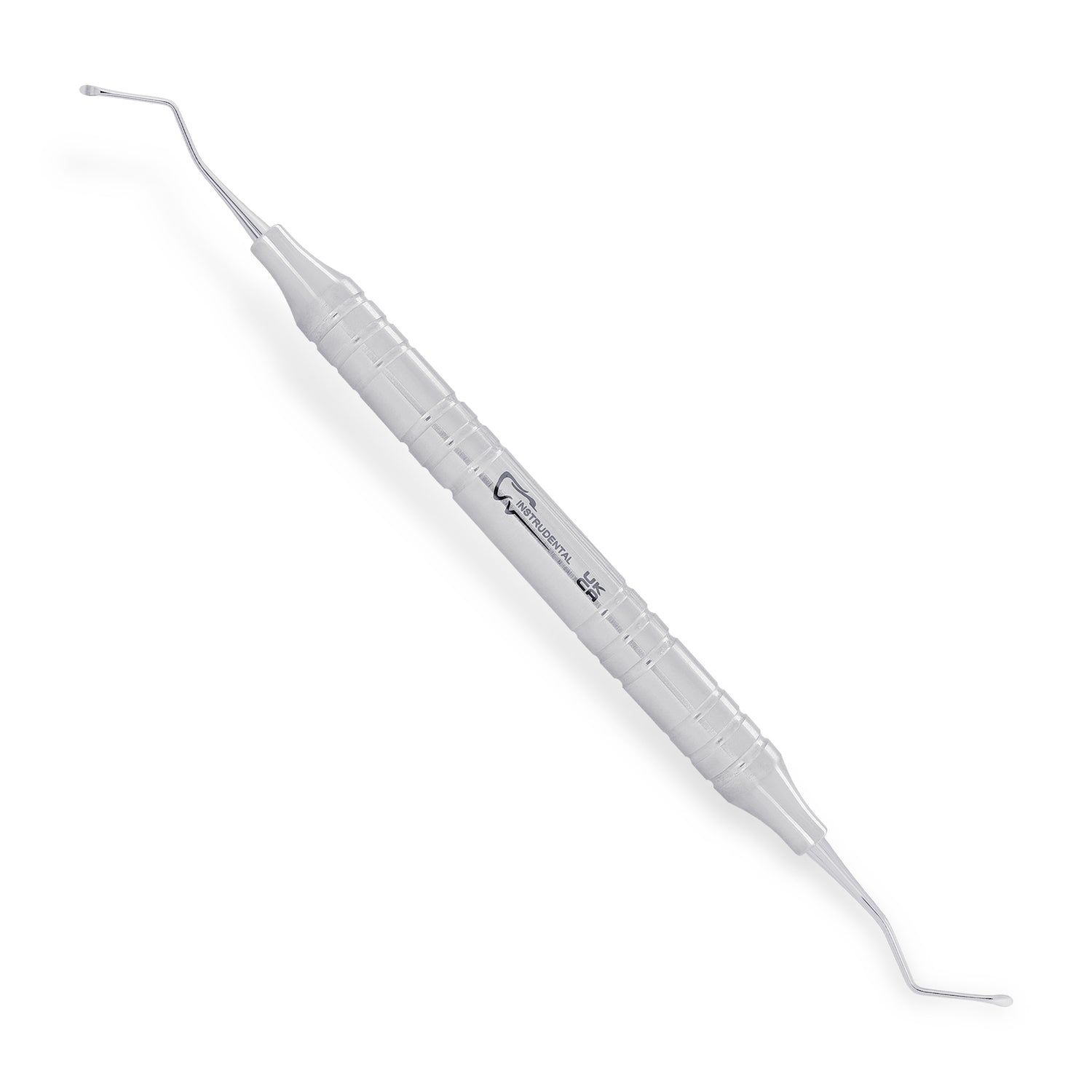
The UNC-15/6 is a double-ended diagnostic instrument with a UNC-15 (University of North Carolina) periodontal probe on one end and a No. 6 explorer on the other, so you can probe and explore without changing instruments. The probe end has a slim, straight tip on an angled shank, marked at every millimetre up to 15mm, with black bands at 4 to 5, 9 to 10 and 14 to 15mm. The explorer end is a fine, unmarked, sharp point on a straight shank with a single bend near the end, so the tip sits at roughly a right angle. Both ends are set into a wide, lightweight, textured silicone handle.
- UNC-15 probe end marked at every millimetre to 15mm, with black bands at 4 to 5, 9 to 10 and 14 to 15mm
- No. 6 explorer end with a fine, sharp point for checking tooth surfaces and restoration margins by feel
- Wide, lightweight, textured silicone handle for a comfortable, secure grip
- Hardened Japanese-standard J2 stainless steel working ends, autoclavable
FAQs
What is a UNC-15/6 probe and explorer used for?
The UNC-15 end measures periodontal pocket depth and checks for bleeding on probing during a full periodontal examination and charting. Combined with the position of the gingival margin relative to the cemento-enamel junction, those readings also give the clinical attachment level. The No. 6 explorer end is used to feel tooth surfaces for calculus and surface defects and to check the fit of restoration margins. Having both on one handle means fewer instrument changes during an examination.
What do the markings on the UNC-15 end mean?
The tip is marked at every millimetre from 1 to 15mm, so each reading can be taken to the nearest millimetre. The black bands at 4 to 5, 9 to 10 and 14 to 15mm make it easy to see at a glance where 5, 10 and 15mm fall. The explorer end is not marked.
How is this different from a single-ended CP15 probe?
Both carry the same UNC-15 markings. A CP15 probe is single-ended, with one probe tip. This UNC-15/6 is double-ended, adding a No. 6 explorer at the other end, so you can probe and explore with one instrument.
Why choose a silicone handle?
A moulded silicone handle is wider and lighter than a solid steel one, which many clinicians find more comfortable over a long session, and the textured surface helps keep a secure grip.
What material is this instrument made from?
The working ends are hardened Japanese-standard J2 stainless steel, set into a moulded silicone handle. Both are fully autoclavable.
Handle colour: choose Blue, Black, Pink or Purple. All are the same instrument; only the handle colour differs.
Part of our probe range alongside the UNC-15 probe / 23 explorer, the CPITN-C / UNC-15 probe and the double-ended CP-11/CP-12 probe.
Browse our full Diagnostic range.
Manufactured by InstruDental, UK specialists in dental hand instruments.
Colour note: Handle colours may look slightly different in person due to screen brightness, settings and lighting.


The UNC-15/6 is a double-ended diagnostic instrument with a UNC-15 (University of North Carolina) periodontal probe on one end and a No. 6 explorer on the other, so you can probe and explore without changing instruments. The probe end has a slim, straight tip on an angled shank, marked at every millimetre up to 15mm, with black bands at 4 to 5, 9 to 10 and 14 to 15mm. The explorer end is a fine, unmarked, sharp point on a straight shank with a single bend near the end, so the tip sits at roughly a right angle. Both ends are set into a wide, lightweight, textured silicone handle.
- UNC-15 probe end marked at every millimetre to 15mm, with black bands at 4 to 5, 9 to 10 and 14 to 15mm
- No. 6 explorer end with a fine, sharp point for checking tooth surfaces and restoration margins by feel
- Wide, lightweight, textured silicone handle for a comfortable, secure grip
- Hardened Japanese-standard J2 stainless steel working ends, autoclavable
FAQs
What is a UNC-15/6 probe and explorer used for?
The UNC-15 end measures periodontal pocket depth and checks for bleeding on probing during a full periodontal examination and charting. Combined with the position of the gingival margin relative to the cemento-enamel junction, those readings also give the clinical attachment level. The No. 6 explorer end is used to feel tooth surfaces for calculus and surface defects and to check the fit of restoration margins. Having both on one handle means fewer instrument changes during an examination.
What do the markings on the UNC-15 end mean?
The tip is marked at every millimetre from 1 to 15mm, so each reading can be taken to the nearest millimetre. The black bands at 4 to 5, 9 to 10 and 14 to 15mm make it easy to see at a glance where 5, 10 and 15mm fall. The explorer end is not marked.
How is this different from a single-ended CP15 probe?
Both carry the same UNC-15 markings. A CP15 probe is single-ended, with one probe tip. This UNC-15/6 is double-ended, adding a No. 6 explorer at the other end, so you can probe and explore with one instrument.
Why choose a silicone handle?
A moulded silicone handle is wider and lighter than a solid steel one, which many clinicians find more comfortable over a long session, and the textured surface helps keep a secure grip.
What material is this instrument made from?
The working ends are hardened Japanese-standard J2 stainless steel, set into a moulded silicone handle. Both are fully autoclavable.
Handle colour: choose Blue, Black, Pink or Purple. All are the same instrument; only the handle colour differs.
Part of our probe range alongside the UNC-15 probe / 23 explorer, the CPITN-C / UNC-15 probe and the double-ended CP-11/CP-12 probe.
Browse our full Diagnostic range.
Manufactured by InstruDental, UK specialists in dental hand instruments.
Colour note: Handle colours may look slightly different in person due to screen brightness, settings and lighting.
Recently viewed