Skip to content

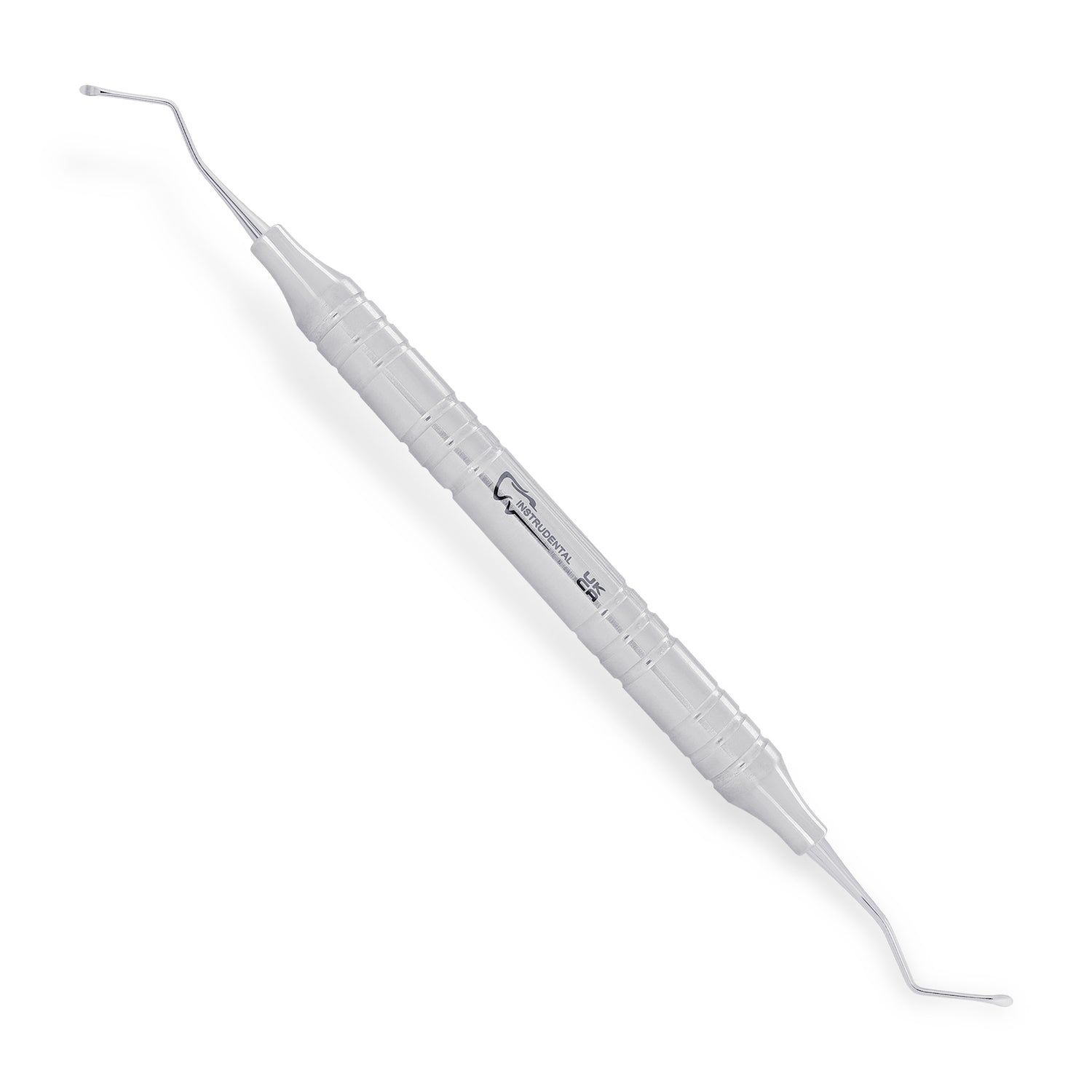
Periotome Luxating Elevator, Contra Angle 3.0mm, PPU Handle

Regular price £7.99
Sale price £7.99
Shipping calculated at checkout.
3-year warranty against manufacturing defects · terms
SKU 142116
Brand INSTRUDENTAL
Type Surgery
Category Elevators
Tags 1421-16
Stock ✓ In Stock

DETAILS AND CARE

A contra angle periotome, also known as a luxating elevator, with a 3.0mm blade. The shank is bent so the blade sits offset from the line of the handle, which helps it reach the lingual and distal surfaces of molars where a straight instrument is hard to align with the root. Once in position, the thin blade is worked into the periodontal ligament space to cut the ligament fibres and loosen the tooth before forceps are used, without levering against the surrounding bone.

  • Contra angle 3.0mm blade for the lingual and distal surfaces of molars
  • Offset shank for posterior access where a straight shank cannot line up with the root
  • Thin blade for severing the periodontal ligament with light pressure
  • Japanese-standard J2 stainless steel working tip
  • PPU handle; sold individually

FAQs

When is a contra angle periotome useful?

Mainly on posterior teeth, particularly the back and tongue-side surfaces of molars, where the angle of approach makes a straight or curved blade difficult to place.

How is it different from the inverted periotome?

Both help with lingual and distal surfaces. The contra angle uses an offset shank to reach molars; the inverted version reverses the curve of the blade itself. Which one feels better often comes down to the tooth and personal preference.

What is it made from?

The working tip is Japanese-standard J2 stainless steel, set in a PPU handle.

Also available as a 7-piece set: Periotome Luxating Elevator Set.

Part of our extraction range alongside periotomes, root elevators and extraction forceps.

Browse our full Surgery range.

Manufactured by InstruDental, UK specialists in dental hand instruments.

DESCRIPTION

A contra angle periotome, also known as a luxating elevator, with a 3.0mm blade. The shank is bent so the blade sits offset from the line of the handle, which helps it reach the lingual and distal surfaces of molars where a straight instrument is hard to align with the root. Once in position, the thin blade is worked into the periodontal ligament space to cut the ligament fibres and loosen the tooth before forceps are used, without levering against the surrounding bone.

  • Contra angle 3.0mm blade for the lingual and distal surfaces of molars
  • Offset shank for posterior access where a straight shank cannot line up with the root
  • Thin blade for severing the periodontal ligament with light pressure
  • Japanese-standard J2 stainless steel working tip
  • PPU handle; sold individually

FAQs

When is a contra angle periotome useful?

Mainly on posterior teeth, particularly the back and tongue-side surfaces of molars, where the angle of approach makes a straight or curved blade difficult to place.

How is it different from the inverted periotome?

Both help with lingual and distal surfaces. The contra angle uses an offset shank to reach molars; the inverted version reverses the curve of the blade itself. Which one feels better often comes down to the tooth and personal preference.

What is it made from?

The working tip is Japanese-standard J2 stainless steel, set in a PPU handle.

Also available as a 7-piece set: Periotome Luxating Elevator Set.

Part of our extraction range alongside periotomes, root elevators and extraction forceps.

Browse our full Surgery range.

Manufactured by InstruDental, UK specialists in dental hand instruments.

Recently viewed
    WhatsApp Icon